
⚡A voice agent can look up the caller's name, history, and available slots before the call connects - removing awkward silences and creating a noticeably better experience.
What Happens Before the Agent Picks Up
A business receives a call from a customer. Through a little technical wizardry, the system checks whether the number being called from belongs to an existing customer. If it does, the agent receives the caller's name, their upcoming bookings, their account balance, remaining sessions - whatever useful information the business holds on that person. All of this happens before the agent picks up.
"Hi Sarah, welcome back to Bella Spa. I can see you have a booking on the 24th of January. How can I help you today?"
Compare that to: "Hello, how can I help you? ... Can I take your name? ... And could I get your phone number? ... Let me check your bookings... one moment please..."
The former feels very personal. The latter doesn't.
Why Personalisation Matters on a Phone Call
Hearing your own name in conversation triggers a specific neurological response. Research published in Brain Research (Carmody and Lewis, 2006) found that the brain activates regions associated with social behaviour and long-term memory when a person hears their name - a response distinct from hearing any other word.
McKinsey's 2021 personalisation research found that 71% of consumers expect companies to deliver personalised interactions, and 76% become frustrated when it does not happen. Invoca's Buyer Experience Benchmark reported a similar figure: 71% of respondents said they believe businesses already know why they are calling before they answer.
Callers appreciate personalisation, but to an extent they now expect it. In fact, it can be quite irritating when they don't get it - 76% of McKinsey's respondents said as much.

How Does the Agent Know Who's Calling?
When the call comes in, the system takes the caller's phone number and checks it against the business's customer records. If the number matches, it pulls out whatever is on file: the caller's name, their booking history, account status, remaining sessions, language preference.
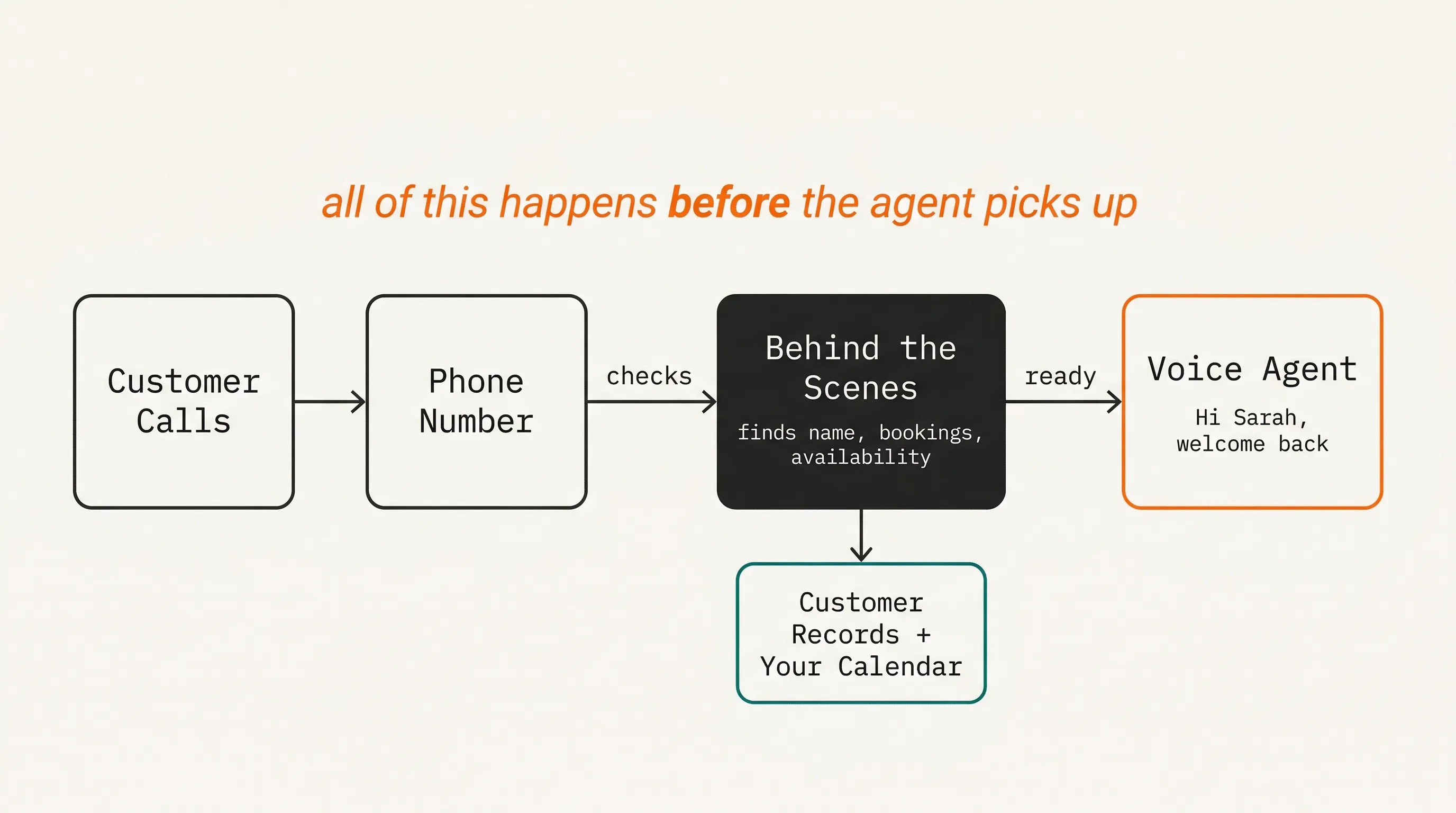
Consider a language school. A student calls to book their next English class. The system recognises the number and retrieves: Daniel, B2 level, 3 classes remaining on current package, preferred teacher: Angelina, last class: Monday 18 March.
The agent opens with: "Hi Daniel, welcome back. You've got three classes left on your current package. How can I help you today?"
The agent doesn't need to ask for his name, or for him to spell it out. No "can you hold while I check?" The caller gets straight to the point, and the call is shorter (and sweeter) for everyone.
Reducing Awkward Silences
During a voice agent call, there are moments where the agent needs to look something up - checking available appointment slots, for example. These lookups add time to the conversation and create periods of silence that can feel awkward for the caller.
In the real world, human agents handle this pretty well but AI voice still struggles despite our best efforts. For instance, the AI agent might say "let me check that for you" but there is only so many times that phrase works before it starts to feel like a limitation.
One solution is to provide the agent with the information it needs before the call starts. At the same time as looking up customer specific information, we can also use that time to look up other information such as calendar availability.
Key Advantages:
- Minimise or reduce to zero the awkward silences - the customer experience is noticeably smoother.
- Reduce the length of the call - which reduces the cost of the call.
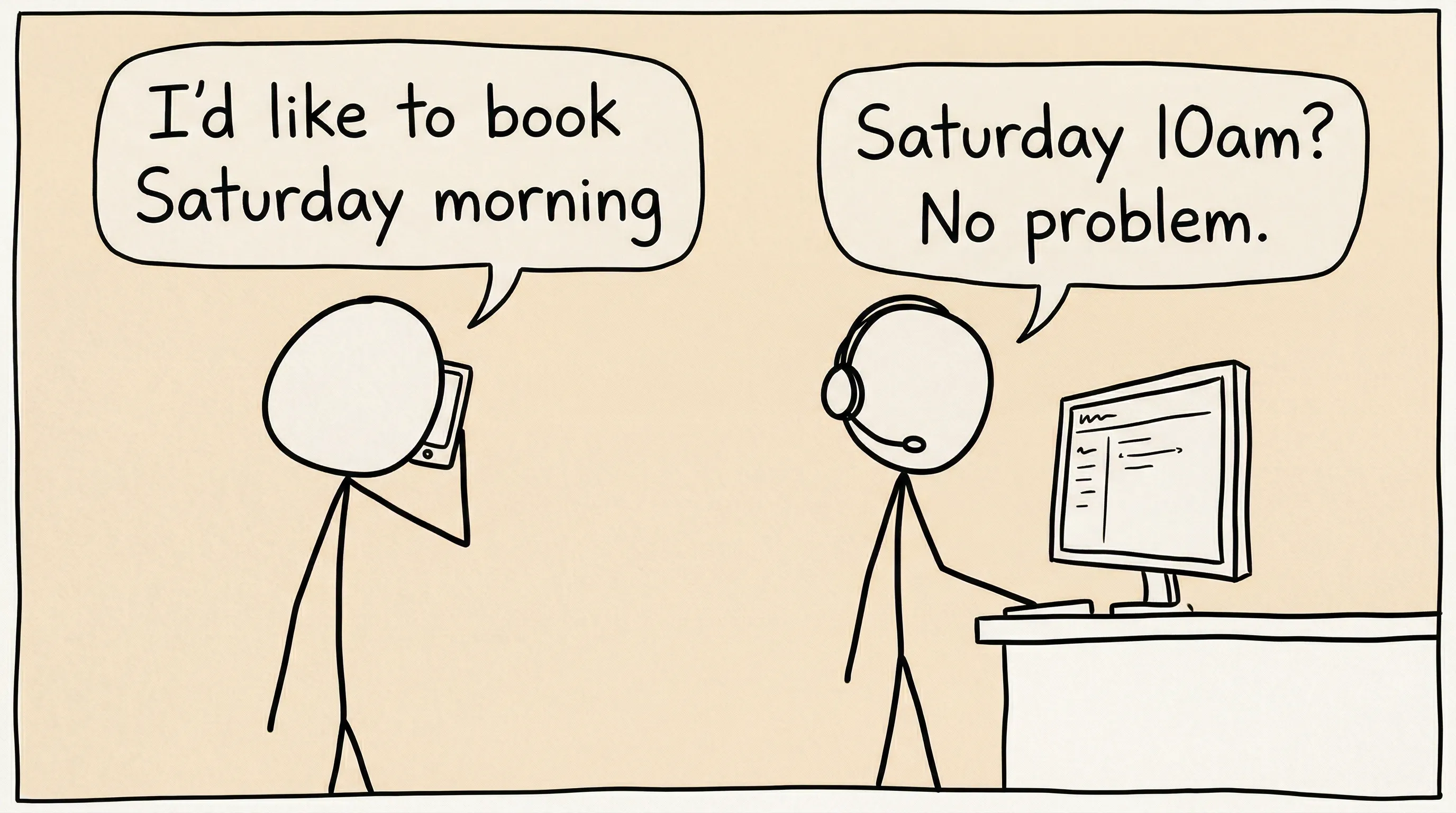
The caller says "I'd like to book a haircut on Saturday morning" and the agent already has the answer.
"Saturday morning - yes, no problem. I can do that for you. How does 10am sound?"
The agent responds as naturally as a person checking a diary they already have open.
What About New Callers?
Not every caller will be in the system. New callers, customers without accounts, and withheld numbers will arrive without any prior context. Behind the scenes, the system needs to account for each of these scenarios separately - a new caller goes down one path, an existing caller goes down another, and if the number is not known or withheld, that needs handling too.
It is also important to make sure that when storing caller data, we do so responsibly and in accordance with the data protection regulations that apply to the business's geography.
Conclusion
This is a small addition to a voice agent setup that changes the entire feel of a call. It turns a question-heavy interaction into something that feels attentive and competent. For businesses running a voice agent that handles bookings, this is worth considering early. The caller notices - they may not know exactly why the experience felt better, but they felt it.
Key Takeaways
- The caller's number can be checked against customer records before the agent picks up
- Greeting a caller by name triggers a measurably different neurological response - the brain pays attention
- Pre-loading availability removes the longest pause in any booking call
- 71% of consumers expect businesses to know who they are when they call
- This approach works across all major voice AI platforms